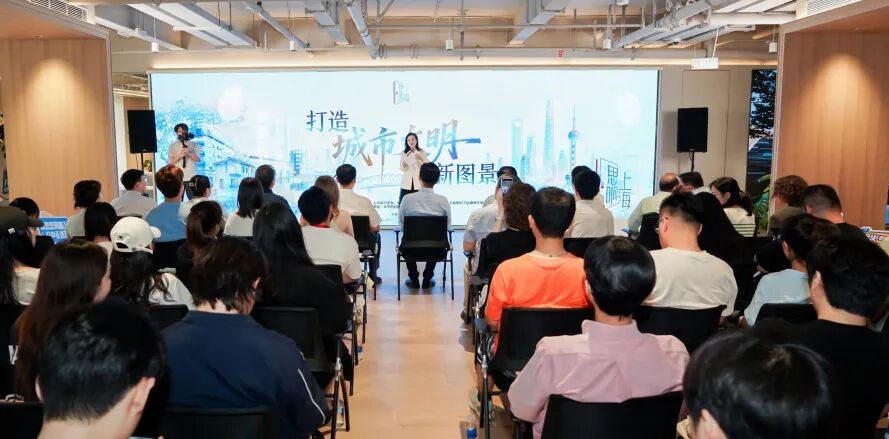
An event titled "Resonant Shanghai – Crafting a New Vision of Urban Civilization" was held on May 28 at the Hongqiao One-Stop Service Center for Overseas Talent in Changning District.
Centering on the theme "Why choose Shanghai, why like Shanghai," the gathering invited Chinese and foreign residents to share their personal experiences and insights, offering participants a deeper understanding of the city's distinctive Shanghai-style urban civilization.
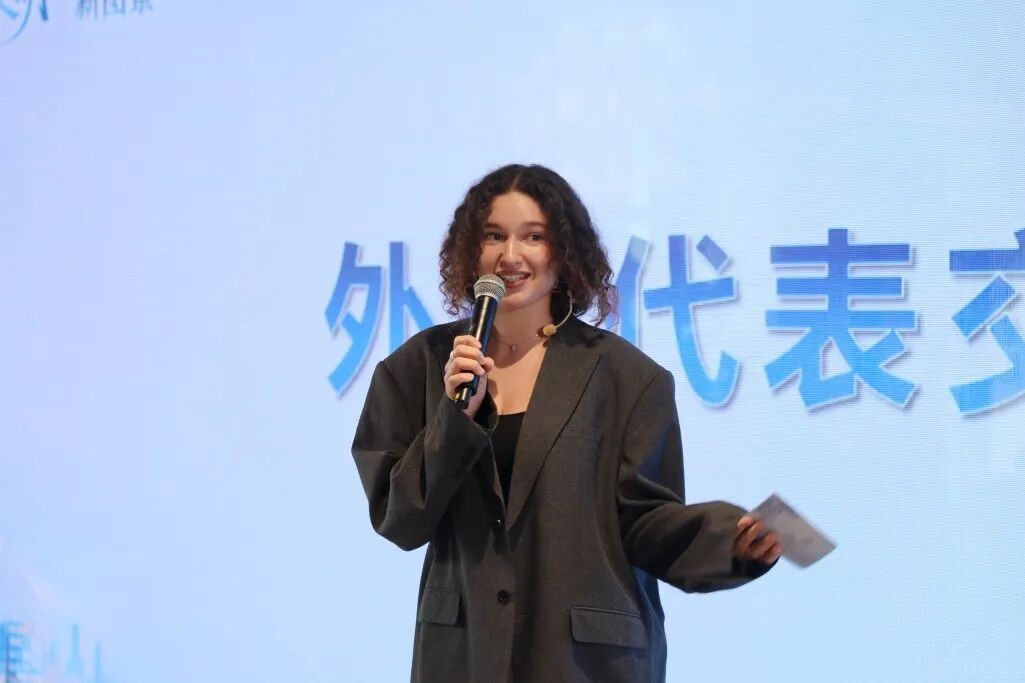
A Belarusian student studying in the city said that she was most impressed by Shanghai's order, safety, and convenience. Urban civilization isn’t just about skyscrapers — it's about respect and kindness among people. In Shanghai, the streets are clean, transport is easy, and even strangers are eager to help with directions. Changning District, as a pioneer of the “15-minute living circle,” allows residents to meet most of their daily needs in one place.
Professor Liu Shilin, dean of the Institute of Urban Science and professor at School of Media and Communication, Shanghai Jiao Tong University, analyzed the relationship between "city" and "civilization" from the perspective of Shanghai's history and culture, guiding the audience to reexamine the "deep cultural structure" of the city's unique Shanghai-style urban civilization.
On the topic of urban renewal, Wang Jian, associate dean of the Shanghai Institute for Urban Renewal and Sustainable Development, Shanghai University, noted that keeping people at the core of urban development and turning growth outcomes into tangible, everyday happiness is a vital practice of the people-centered city concept and an enduring mission of urban renewal in the new era.
Scholars and residents also discussed emerging ideas, such as the concept of "cultural accessibility" for people from diverse backgrounds. One scholar said that the essence of urban civilization lies not only in infrastructure but also in accommodating cultural differences — a new challenge for Shanghai's public cultural services and urban governance.