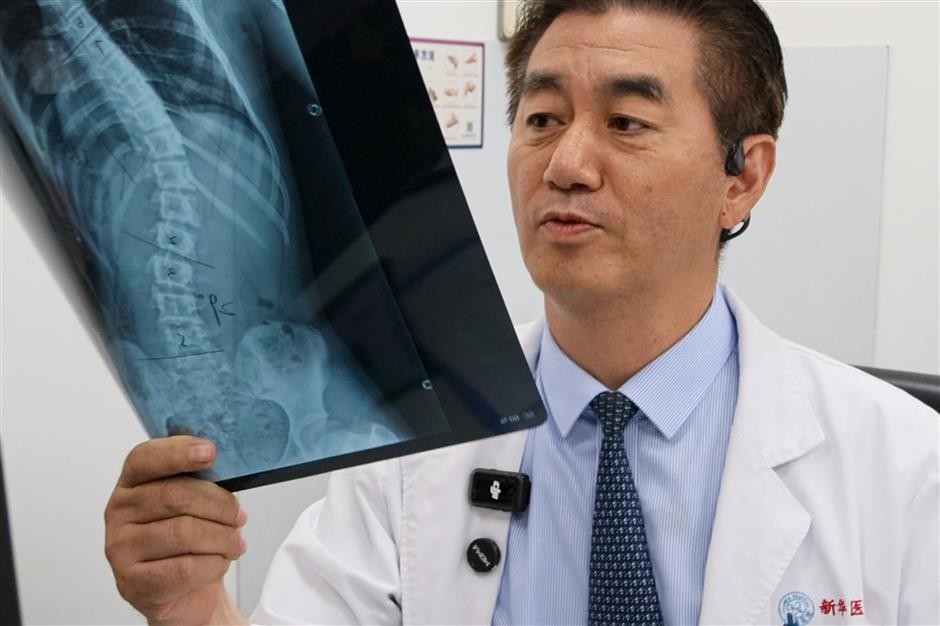
Xinhua Hospital's comprehensive treatment approach helped a 15-year-old Australian girl with severe scoliosis straighten her spine without surgery.
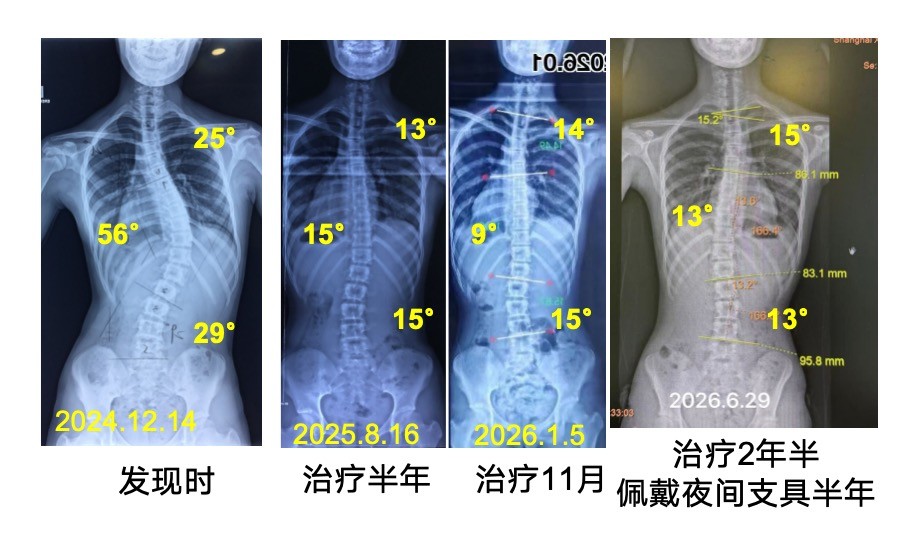
Surgery is required for spine curves over 40 degrees, as per clinical recommendations. Despite a 56-degree curve, the girl recovered to 15 degrees in six months with non-surgical therapies such as focused rehabilitation exercises and orthotic bracing.
Dr Yang Junlin, head of the Spine Center at Xinhua Hospital, said that scoliosis is a frequent issue affecting 2 to 3 percent of elementary and secondary school pupils.
"A spinal curve of 10 degrees or more is scoliosis, which can be treated with physical therapy, bracing, or surgery. Most children and families prefer non-surgical methods," Dr Yang said.
"For patients with curves over 40 degrees, we offer comprehensive long-term management and online-offline supervision. The successful conservative treatment of this Australian girl was due to her family's commitment to non-surgical therapy and her spinal flexibility. She correctly wore her brace, exercised daily, and sent our staff video updates for remote monitoring. Her spinal curve dropped to 15 degrees in six months."
After her curve reached 15 degrees, the patient switched from full-time bracing to nighttime-only use. Xinhua Hospital confirmed that her spinal curvature remained steady at 13 degrees after six months, a medical marvel for the young girl who acquired an almost straight spine by conservative treatment alone, Dr Yang said.
"This young patient has achieved a medical miracle – regaining an almost straight spine through conservative treatment alone," Yang noted. "Her and her family's perseverance and our team's professionalism led to this result. We evaluate and treat each child individually based on their conditions and needs. This comprehensive treatment plan won Shanghai and national awards.
"We have treated over 40,000 children and adolescents with non-surgical scoliosis, including over 2,000 severe cases with curves between 40 and 60 degrees, breaking clinical conventions. We perform spinal surgery for severely curved spines that cannot be managed conservatively."
The girl's father stated that the family had consulted multiple specialists, including top spinal surgeons from Australia, all of whom suggested spinal fusion surgery.
"Australian physicians had scheduled spinal surgery for my daughter. We chose to try Dr Yang Junlin's treatment after learning about him, and it proved to be a wonderful option," he said.
"We have since recommended many Australian friends to travel to Shanghai for scoliosis consultation and treatment."
Key Factors for Successful Scoliosis Conservative Treatment
The conservative management yielded exceptional spinal alignment improvements. Researchers have identified four core determinants of effective rehabilitation:
Positive mental state: Self‑discipline and an optimistic mindset ease chronic muscle tension linked to spinal torsion. Physical correction restores adolescents' self‑confidence and alleviates psychological strain on their families.
Adequate sunlight exposure: Sufficient UV radiation boosts vitamin D synthesis, enhancing bone mineral density and spinal skeletal stability – a natural advantage in sun‑rich regions year‑round.
High‑protein daily diet: Adequate intake of animal protein nourishes paraspinal muscles, correcting asymmetric muscle tension that drives progressive spinal curvature.
Consistent personalized exercise: Ample free time supports regular scoliosis‑specific training, the cornerstone of halting curve progression and remodelling spinal posture.
Many international physicians initially questioned this Chinese conservative regimen, viewing frequent hospital visits as impractical. The Xinhua team clarified that modern optimized protocols only require 1–2 in‑person professional sessions periodically, with younger patients responding exceptionally well to this minimally disruptive approach.
Critical Treatment Window: Timing Determines Outcomes
Specialists emphasize that adolescent spinal correction is a one-time opportunity.
Girls experience peak scoliosis progression from age 10 until menarche;
Boys enter rapid skeletal growth around age 13, developing spinal curves 1–2 years later than female peers.
The pre‑menarchal growth phase in girls represents the optimal rehabilitation window: spinal bones remain highly malleable, making curves most reversible. While intervention still yields benefits up to age 18, corrective difficulty rises sharply as skeletal maturity nears.
Compared with Western scoliosis care, overseas treatment incurs drastically higher medical costs. China's affordable, efficient, conservative rehabilitation stands out as a globally competitive alternative.
Global Call to Promote Holistic Conservative Therapy
Despite strong clinical evidence, this multimodal rehabilitation model remains underpromoted domestically and internationally. Untreated severe scoliosis causes uneven shoulder height, chronic back pain, impaired cardiopulmonary function, and severe self-esteem and anxiety issues – especially among teenage girls.
Experts urge the global pediatric and orthopedic communities to integrate sunlight guidance, standardized high‑protein dietary plans, and customized exercise prescriptions into routine scoliosis care. Prioritizing early screening and pre‑adolescent intervention can drastically reduce global spinal surgery rates.
"Spinal rehabilitation is far more than physical correction – it reshapes teenagers' self-perception and family well-being through sustainable healthy habits," Yang noted. "Early, holistic conservative care can spare most young patients from major spinal surgery, allowing them to grow with straight spines and unshaken confidence."