Two groundbreaking domestic advances in prostate cancer management have been launched to build a comprehensive full-cycle healthcare system, covering early screening, accurate diagnosis, personalized treatment, advanced disease control and long-term rehabilitation.
Released at the 2026 Pujiang Prostate Cancer Academic Conference in Shanghai, the 2026 Chinese Prostate Cancer Diagnosis and Treatment Guidelines and the 2026 White Paper on Advanced Prostate Cancer in China jointly establish a standardized “Chinese Solution” to benefit millions of prostate cancer patients nationwide.
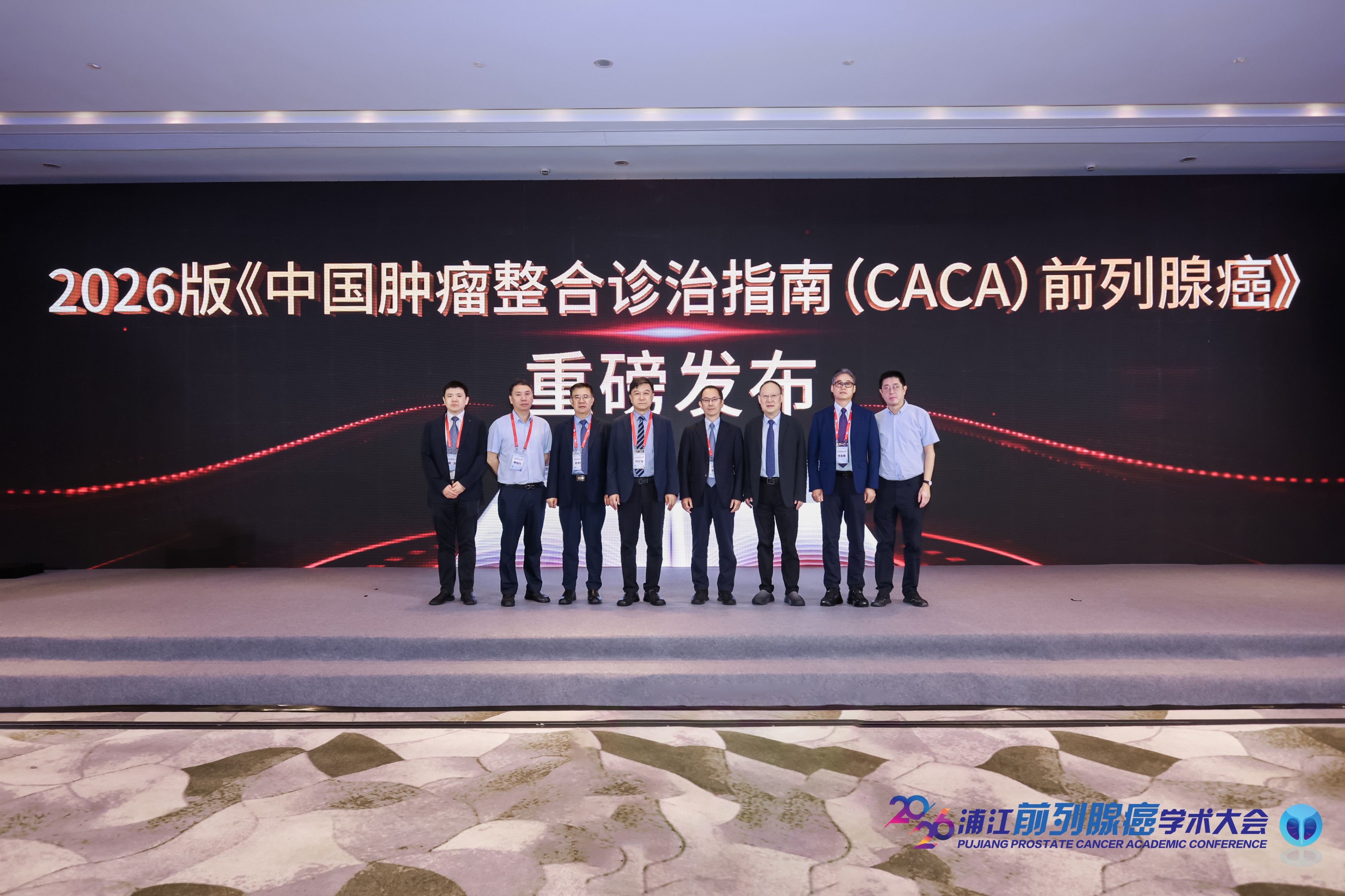
Led by Professor Ye Dingwei’s team at Fudan University Shanghai Cancer Center, the updated guidelines revolutionize the traditional fragmented, single-discipline treatment model. They create a continuous full-cycle management framework, prioritizing early screening and precise risk stratification.
Moving beyond the conventional one-size-fits-all surgical approach, the guidelines endorse tailored treatment strategies. Low-risk patients may adopt active surveillance, while operable cases receive precise radical treatment. For advanced prostate cancer, the guidelines optimize the rational sequencing of targeted therapy, endocrine therapy, chemotherapy and PSMA radioligand therapy. This unified national standard ensures consistent, high-quality prostate cancer care across all levels of medical institutions.
Complementing the official guidelines, the new white paper is based on real-world clinical data from Chinese patient populations. It addresses prominent clinical challenges, including delayed diagnosis, redundant genetic testing and non-standard medication use. To reduce the high rate of “late-stage detection”, the white paper promotes expanded precise screening for high-risk groups and standardized genetic testing procedures, eliminating unnecessary medical costs and inefficient treatment.
Notably, the white paper places patients’ quality of life on an equal footing with survival outcomes. As advanced prostate cancer evolves into a controllable chronic disease in China, modern clinical care focuses not only on tumor suppression, but also on protecting urinary function, mental wellness, bone health and long-term daily living ability, enabling patients to achieve high-quality survival with tumors.
The conference also highlighted cutting-edge innovations in urologic surgery. Optimized robotic radical prostatectomy and refined pelvic floor protection techniques achieve both radical tumor resection and functional preservation, significantly speeding up postoperative recovery. Powered by mature multidisciplinary collaboration, patients receive personalized whole-course treatment plans, avoiding repeated examinations and ineffective medical intervention.
As a national leader in prostate cancer treatment and research, Fudan University Shanghai Cancer Center performed 3,746 prostate cancer surgeries in 2025, topping Shanghai’s rankings for nine consecutive years. Its ongoing clinical trials targeting PSMA and TROP2 bring the world’s most innovative therapies to Chinese patients.
The release of the two authoritative documents further advances standardized, precise and humanized prostate cancer management across the country, marking a major milestone in China’s upgraded prostate cancer diagnosis and treatment system.