High-school students launch a China–UK, intergenerational community programme rooted in a century-old cultural neighbourhood, building a borderless bridge of empathy through poetry and easing spiritual loneliness in the digital age
Recently, Poetry Across Ages & Borders (朝夕诗语・跨域共生), a China–UK intergenerational community poetry programme independently conceived by high-school student Amy Zijia Niu (钮子珈) and delivered with classmates Ashley Hewitt, James Yang and Megan Miu, was successfully held at Bridge 8 Creative Park in Ruijin 2nd Road Subdistrict, Huangpu District, Shanghai. The event invited Liu Jian—an authoritative figure in Chinese recitation, well-known host, author of A New Selection of Three Hundred Tang Poems, and founder of the China Children’s Recitation Club—as the core dialogue guest. It built a bilingual platform of empathy for community seniors, local youth, international students and poetry lovers from China and the UK, confronting the collective spiritual isolation that cuts across age and national borders in the digital era.
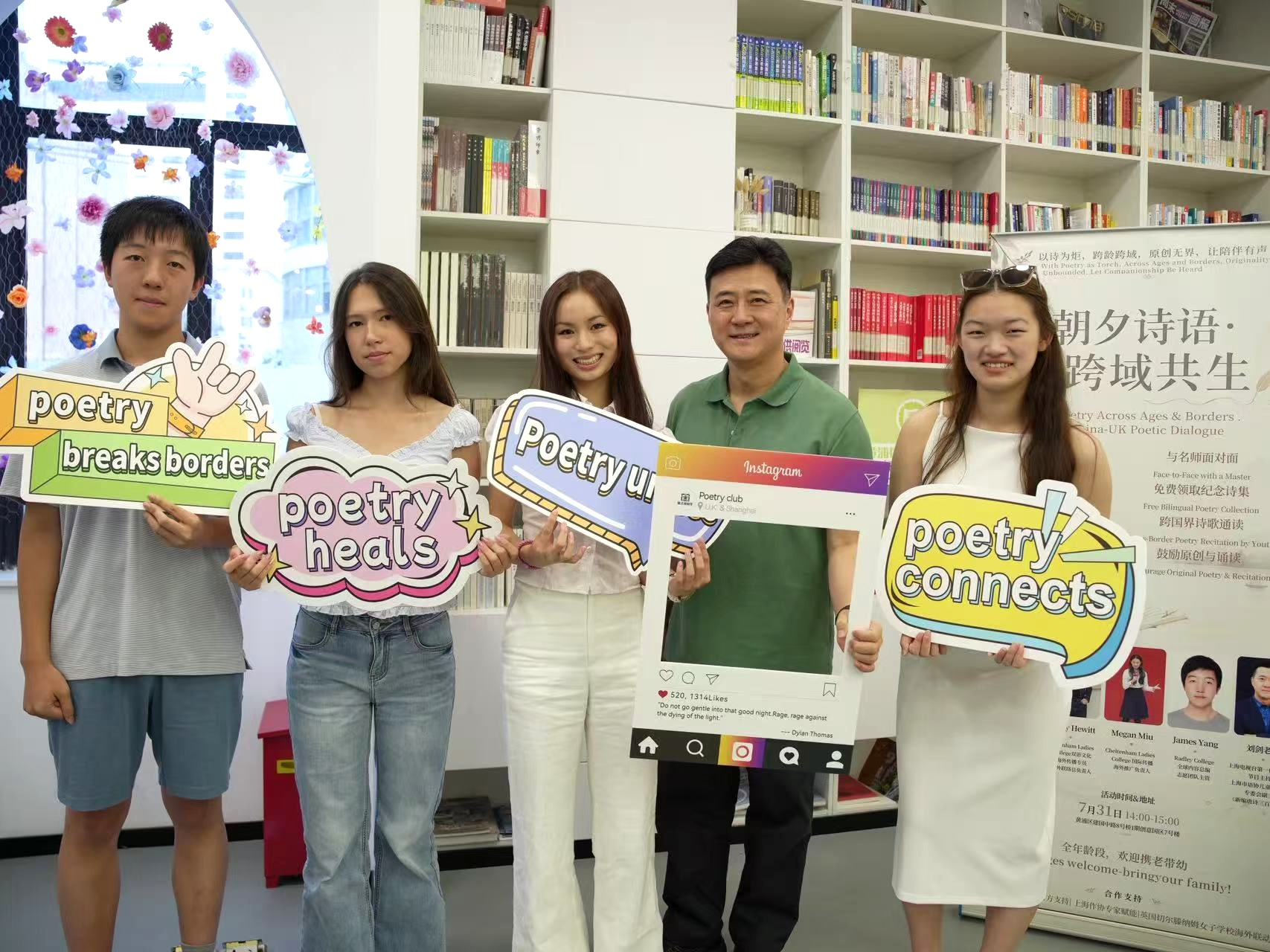
The four student founders and dialogue guest Liu Jian pose with event placards at Bridge 8 Creative Park.
I. Why This Project Began: AI Can Fill the Page—Not the Loneliness of the Heart
Amy is a resident of Ruijin 2nd Road Subdistrict, a neighbourhood steeped in literary culture. At the age of ten she published her original poetry collection Little Hours (《小时光》). While studying in the UK, the widowed grandmother with whom she boarded had long been steeped in solitude; only when she read poetry aloud did a softer light return to her eyes. The elder once told her: “Artificial intelligence can generate millions of comforting lines—but it does not understand the emptiness of losing a companion of half a lifetime. Only reading poetry makes me feel that someone is sharing the same thoughts with me.”
That lived experience became the project’s starting point. Amy then joined Ashley Hewitt, James Yang and Megan Miu—three fellow high-school students—for months of cross-border fieldwork and community research. In parallel, the team engaged senior communities in Shanghai, local middle- and high-school students and international students in the city, while connecting with older people living alone and youth groups across the UK. From extensive interview notes, poetry submissions and emotional feedback, they distilled a shared spiritual dilemma of our time: digital networks appear to bring everyone closer, yet they give rise to three forms of deep loneliness that no algorithm can heal:
•Community seniors: cut off by digital tools; short videos and AI “healing” copy can only pass the time, with no one to listen to the regrets of a lifetime, leaving them long confined to solitude;
•Young people in China: immersed for years in fragmented online social life, under pressure to perform and conceal their feelings, lacking sincere offline emotional dialogue;
•International students overseas: separated by language and culture; AI translation cannot dissolve homesickness under a foreign moon, and loneliness has nowhere to rest.
To build a two-way bridge of poetry, the team spent months on transnational outreach and collected more than thirty English poetry recitations and handwritten messages from young people and older people living alone in the UK. These ordinary voices from overseas were translated, edited and played on loop at the community event. AI can mass-produce verses fitted to every mood—longing, confusion, comfort—but algorithms only stitch words together; they cannot carry the human memories of a life, the regrets of ageing, the restlessness of youth, or homesickness in a foreign land. That is the project’s core conviction: machines can manufacture standardised emotional copy; only poetry that is written by hand and spoken aloud can build warm, two-way connections between people. The team hopes to send classical Chinese poetry to communities of older people living alone in the UK, and to bring more than thirty poetic voices of ordinary people overseas to residents of Shanghai’s communities, so that people of different ages and countries may heal one another through words.
The four high-school students independently completed the full project—planning, overseas community liaison, bilingual translation and local delivery—coordinating every step themselves and opening a channel for transnational cultural exchange through youth initiative.
II. Two Poems Across Mountains and Seas: Shared Feelings from More Than Thirty UK Participants
The whole programme was woven together by two core poems that linked China and the UK, past and present, old and young. Throughout the venue, recitation clips and handwritten messages from more than thirty young people and elders in the UK played on loop—filled with the gentle humanity that travels across time and space.
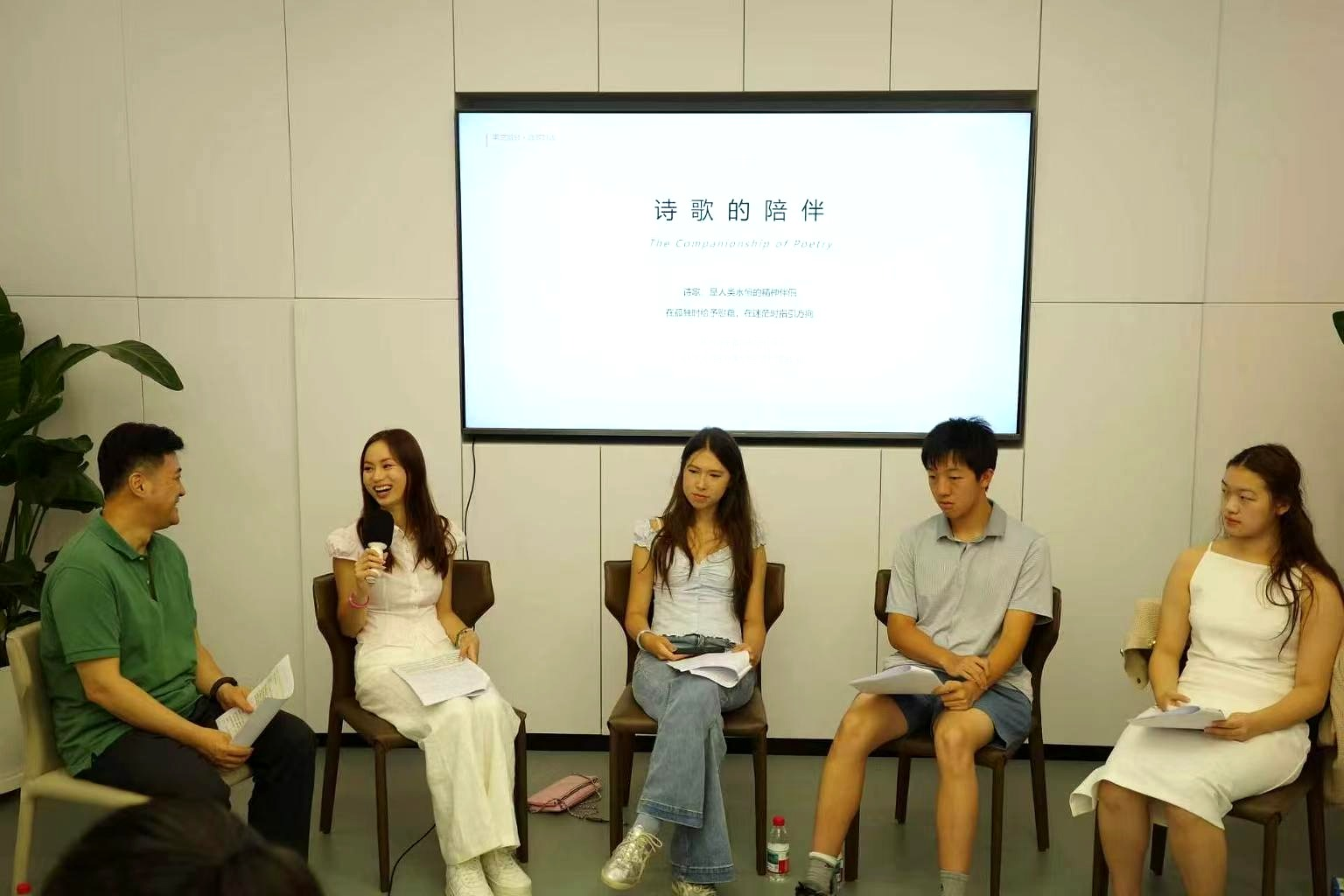
The roundtable dialogue on “The Companionship of Poetry.”
### “The Road Not Taken”: For Every Young Person Facing a Choice
Virginia, an older woman living alone on England’s south coast, was one of the more than thirty overseas contributors. She specially sent a recording of Robert Frost’s “The Road Not Taken” together with a handwritten message, both played throughout the event:
“I have read this poem by the window for ten years; every line holds the countless choices of my life. I send it to young people and older people living alone across the ocean in China. We are thousands of miles apart, yet we share the same bewilderment at life’s forks in the road, the same quiet melancholy when we are alone. Do not fear loneliness—poetry will carry tenderness for us to people we have never met, far away.”
Translated into Chinese by the team, the poem became a spiritual link between young people in China and the UK. On site, young participants reflected: today AI can always push an “optimal life template,” telling us which path to take and who we should become—yet it never accepts the real hesitation, doubt and occasional retreat of ordinary people. “The Road Not Taken” calmly admits that there is no perfect answer in life; every choice shapes a self that is one of a kind. That embrace is a form of support no cold algorithm can offer the young. In the words of the thirty UK participants, the same confusion about choice—and the same reconciliation with it—appears again and again, becoming a resonance that crosses borders.
### “Shui Diao Ge Tou · When Will the Moon Be Clear and Bright”: One Moon, Homesickness Without Borders
Su Shi’s immortal line—“May we all be blessed with longevity / Though far apart, we are still able to share the beauty of the moon together” (但愿人长久,千里共婵娟)—was the Eastern poem with which the team answered the overseas contributors. One Mid-Autumn Festival while studying abroad, Amy shared mooncakes with her host grandmother and looked up at the same full moon, explaining the meaning of the lyric. The elder from another country fell silent for a long time, and said it was the most beautiful expression she had ever heard.
In the roundtable dialogue, Amy retold this personal story: though oceans apart, we see the same moon, and longing finds a place to land. AI can generate a thousand lines about the moon, yet it cannot recreate the true homesickness of someone who looks up in a foreign land and thinks of family and friends; still less can it help an elder from another culture understand the reserved, enduring affection of the Chinese. Drawing on decades of experience in recitation, Liu Jian added that when the deep voice of an older person and the clear voice of a young person read this line together, the empathy woven by sound is a warmth no electronic text can copy.
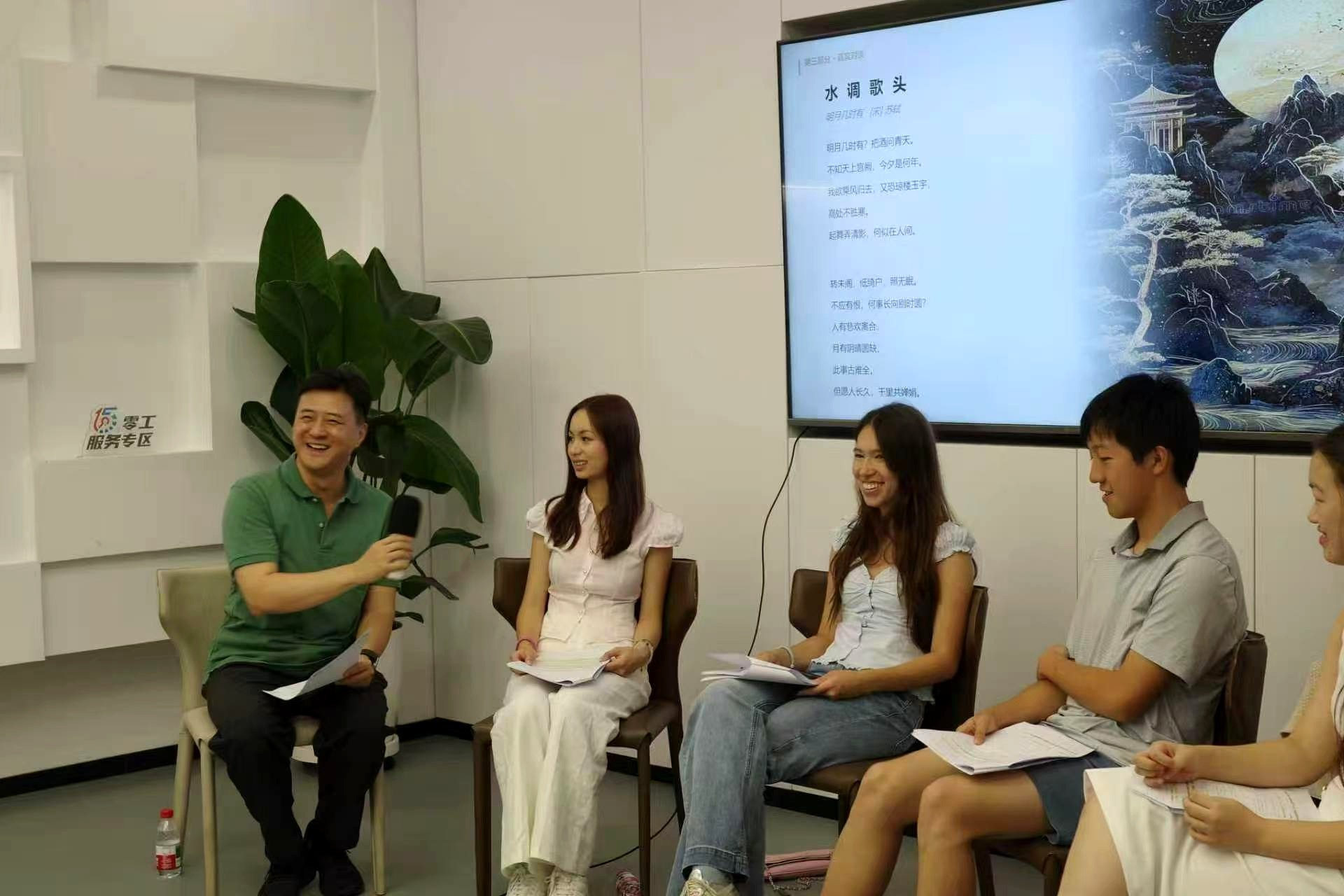
Su Shi’s “Shui Diao Ge Tou · When Will the Moon Be Clear and Bright” recited at the round table, with the full lyric shown on screen.
After bilingual recitation, a senior participant from Shanghai reflected:
“AI can casually write lines about missing home under the moon—but they do not carry our half a lifetime of farewells, or the real feeling of caring for loved ones far away. After hearing the voices of more than thirty older people and young people from the UK today, I realized that across borders and ages, longing is an emotion we all share.”
III. Creation for Everyone: Amy, Who Published Poetry at Ten, Teaches On Site—Everyone Writes Their Own Lines
The programme featured two hands-on segments: inter-generational recitation and live original writing. Children took the stage with Chinese and English classics; elders read short original poems of the years. Amy, who published a poetry collection in childhood, went among the audience to guide more than thirty residents present, offering simple ways into writing and encouraging everyone to set aside worries about style and put down the true thoughts that belong only to them.
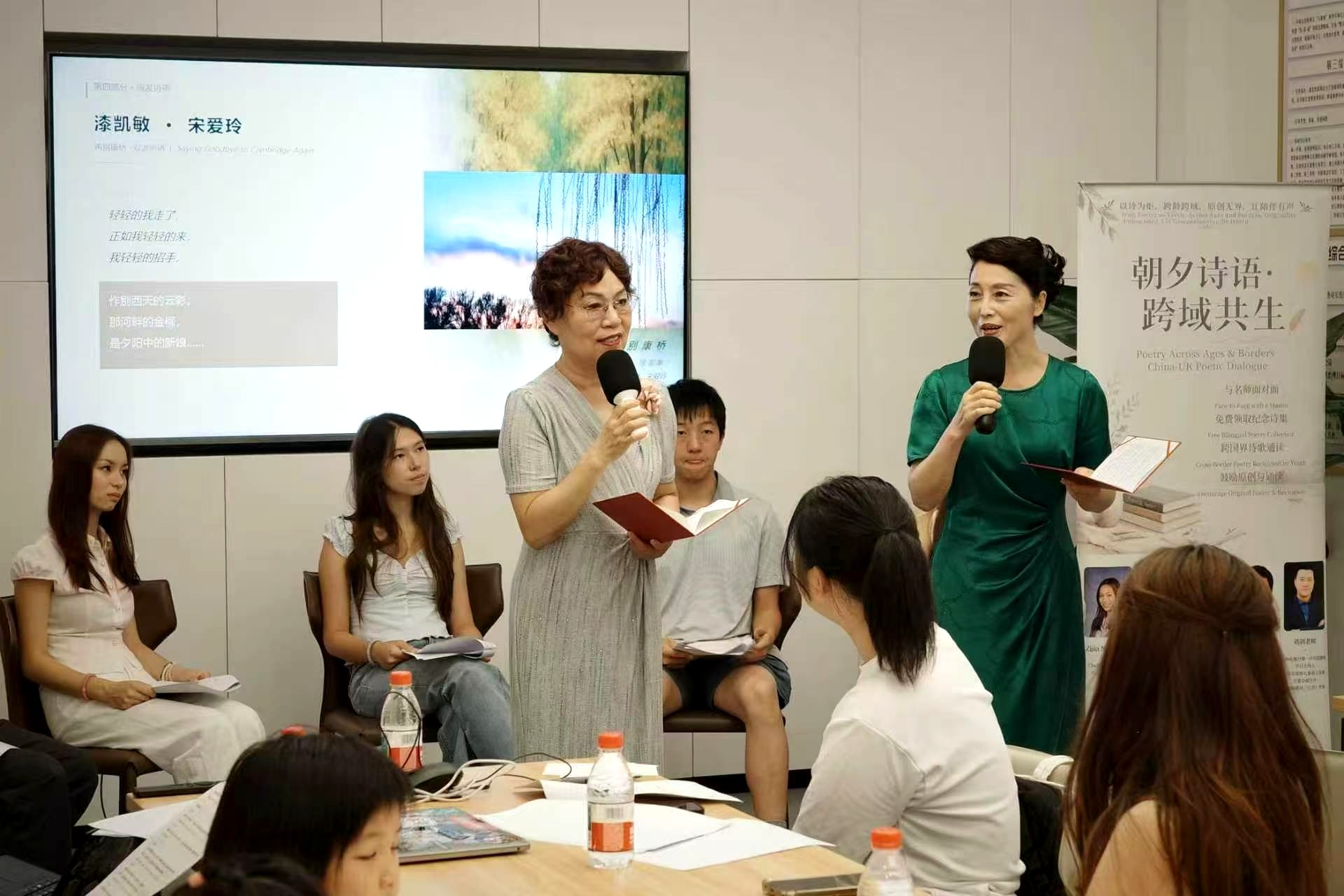
Community elders take the stage for a bilingual recitation of Chinese and English classics.
Participants reached a shared conclusion: poems produced by AI may be neat and polished, yet they are generic templates stripped of real life; the imperfect short lines of ordinary people hold their own fallen leaves, moonlight, homesickness and years—irreplaceable marks of a life. Poetry does not need ornate diction; it needs honest self-expression. That is why we insist on handwriting and reading poetry aloud.
IV. Lasting Public-Interest Commitments: the Dual-City Poetry Corner Opens for Good
At the close of the event, the four student founders jointly announced four sustainable public-interest commitments, and plan to establish a “Dual-City Poetry Corner” (双城诗声诗歌角) in Ruijin 2nd Road Sub-district—permanently free to Chinese and English poetry lovers aged 7 to 70—to ease spiritual loneliness across different groups over the long term:
1.Poetry as healing: regular reading salons and rotating displays of poems and messages from more than thirty UK participants, offering a gentle emotional outlet for older people living alone, young people under pressure, and students overseas;
2.Community original-poetry programme: ongoing calls for handwritten original poems across all ages, preserving real individual feeling and countering the sameness of AI-generated text;
3.Inter-generational recitation: regular joint readings by silver-haired elders and young people on the same stage, narrowing the gap between generations;
4.China–UK dual-city poetic exchange: continued partnership with youth and senior communities in the UK, ongoing collection of poems and messages from ordinary people overseas, and monthly online cross-border readings and offline bilingual poetry gatherings to sustain long-term cultural exchange across time and space.
This community public-interest event was not a one-off occasion, but the starting point of long-term China–UK cultural exchange—a model that can be replicated and impact that can last. On the day, more than thirty community residents from the sub-district and more than thirty poetry lovers from China and the UK engaged in a poetic dialogue across distance; nearly seventy people met one another’s feelings through words across mountains and seas. Looking ahead, the team will rely on the Poetry Corner to host ongoing online transnational poetry gatherings, touring exhibitions of original work at home and abroad, and bilingual translation volunteer workshops—offering a humanistic response to spiritual loneliness in the digital age, breaking barriers of nation, age and time through poetry, and continuing to build a two-way channel of empathy.
At the end of the event, Liu Jian, the student founders, young and senior reciters, and all residents present gathered for a group photograph—capturing this near-seventy-person gathering across mountains and seas, where poetry healed loneliness at a distance.
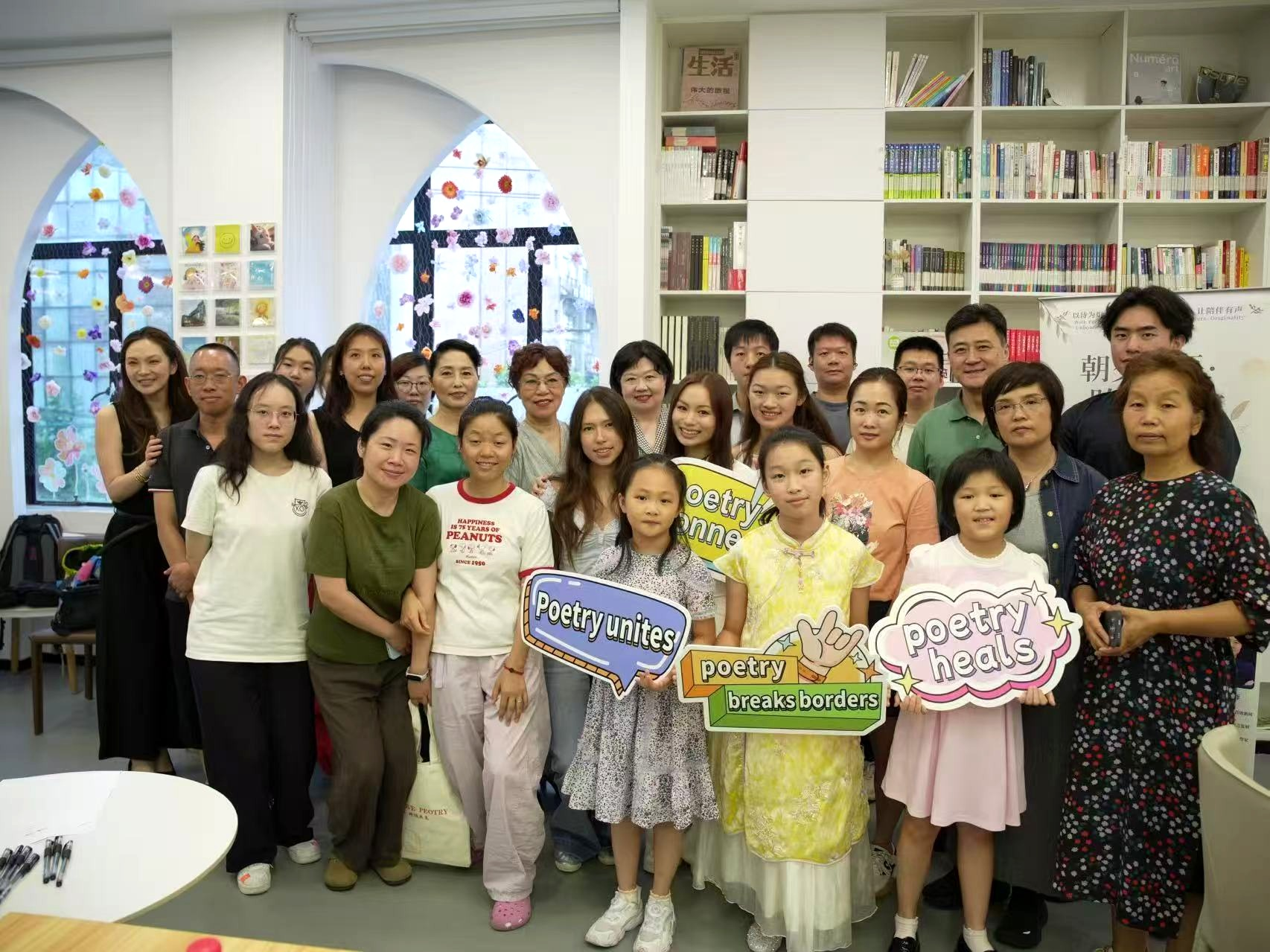
At the close of the event, Liu Jian, the student founders and all residents present gather for a group photograph.