Holding its third annual academic gathering recently, the China Alliance for Medical Technology has gathered industry experts in Shanghai to discuss how to advance disciplinary development, integrate cutting-edge technologies, and cultivate professional talents for clinical and industrial needs.
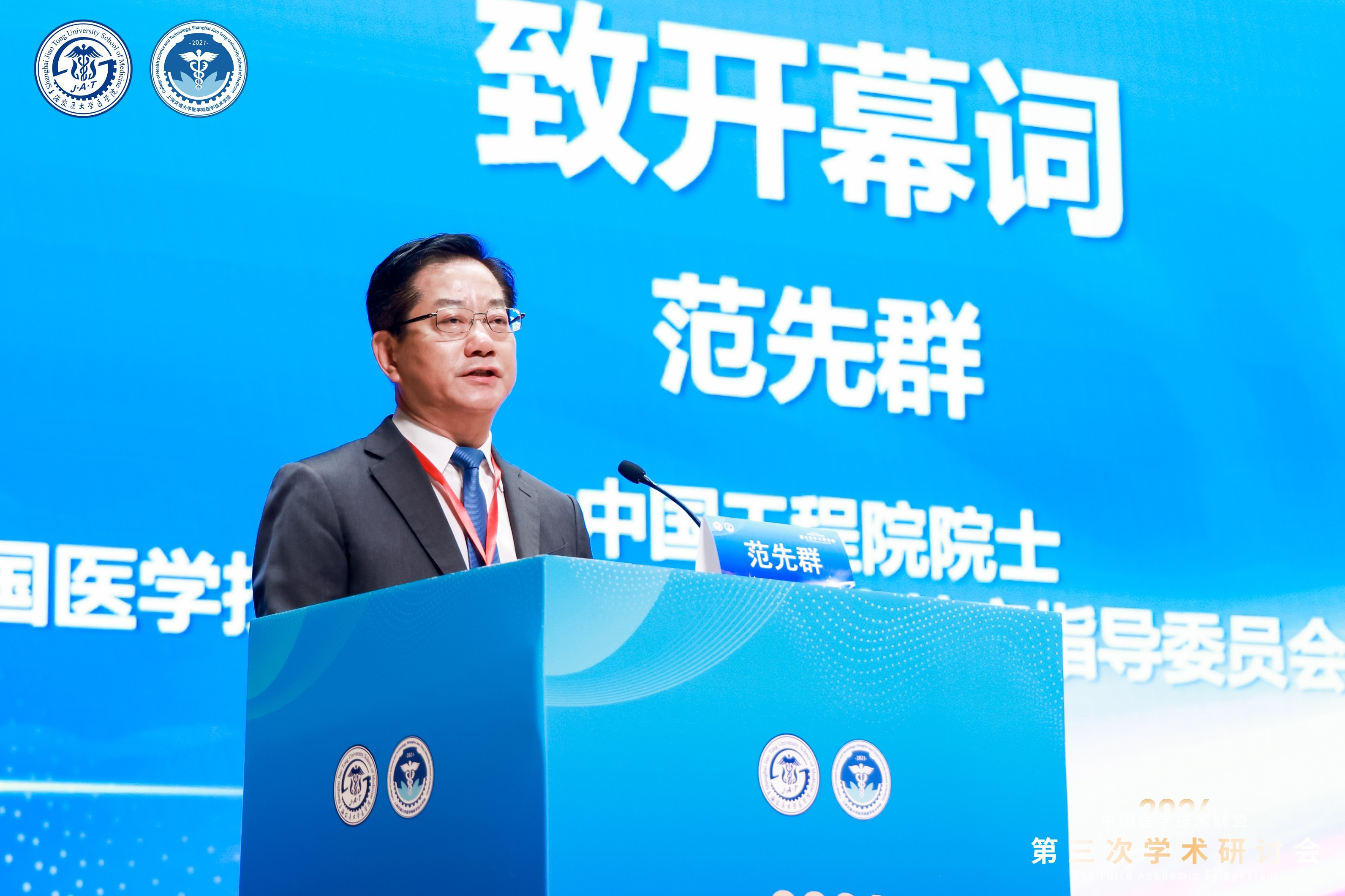
Hosted at the Pudong Campus of Shanghai Jiao Tong University School of Medicine, the two-day symposium focuses on the future upgrading and innovative development of China’s medical technology sector.
At the opening ceremony, academician Fan Xianqun highlighted the core development principle of “serving scientific progress and cultivating industry-oriented talents”, pointing out that modern medical technology education and disciplinary construction must keep pace with global technological frontiers and practical industrial demands. He also outlined key development directions for the alliance, including collaborative talent training, scientific and technological innovation, research achievement transformation, public health service and open international cooperation.
Boasting a complete disciplinary layout, Shanghai Jiao Tong University School of Medicine covers multiple vital fields such as medical laboratory technology, medical imaging technology, hearing and speech rehabilitation, clinical nutrition and optometry. Benefiting from its geographical advantage in the Shanghai International Medical Zone, the school bridges campus education and industrial practice effectively. By extending classroom teaching and laboratory research to frontline medical industries, it ensures that technological innovations originate from and serve real clinical needs.
In the core keynote speech Development and Reflections on Medical Technology, Fan Xianqun sorted out the global development trend of medical technology disciplines, and systematically analyzed the key opportunities and existing challenges for China in disciplinary positioning, talent training and scientific research layout.
In his concluding remarks, he pointed out that the medical technology discipline still faces many developmental bottlenecks. The integration of medicine and engineering needs further deepening, and clear application paths are yet to be formed for empowering medical technology education with artificial intelligence and other emerging digital technologies. Meanwhile, he stressed that the deep integration of scientific innovation and healthcare industry has ushered in a golden developmental period for China’s medical technology, calling for continuous exploration to drive high-quality progress of the discipline.