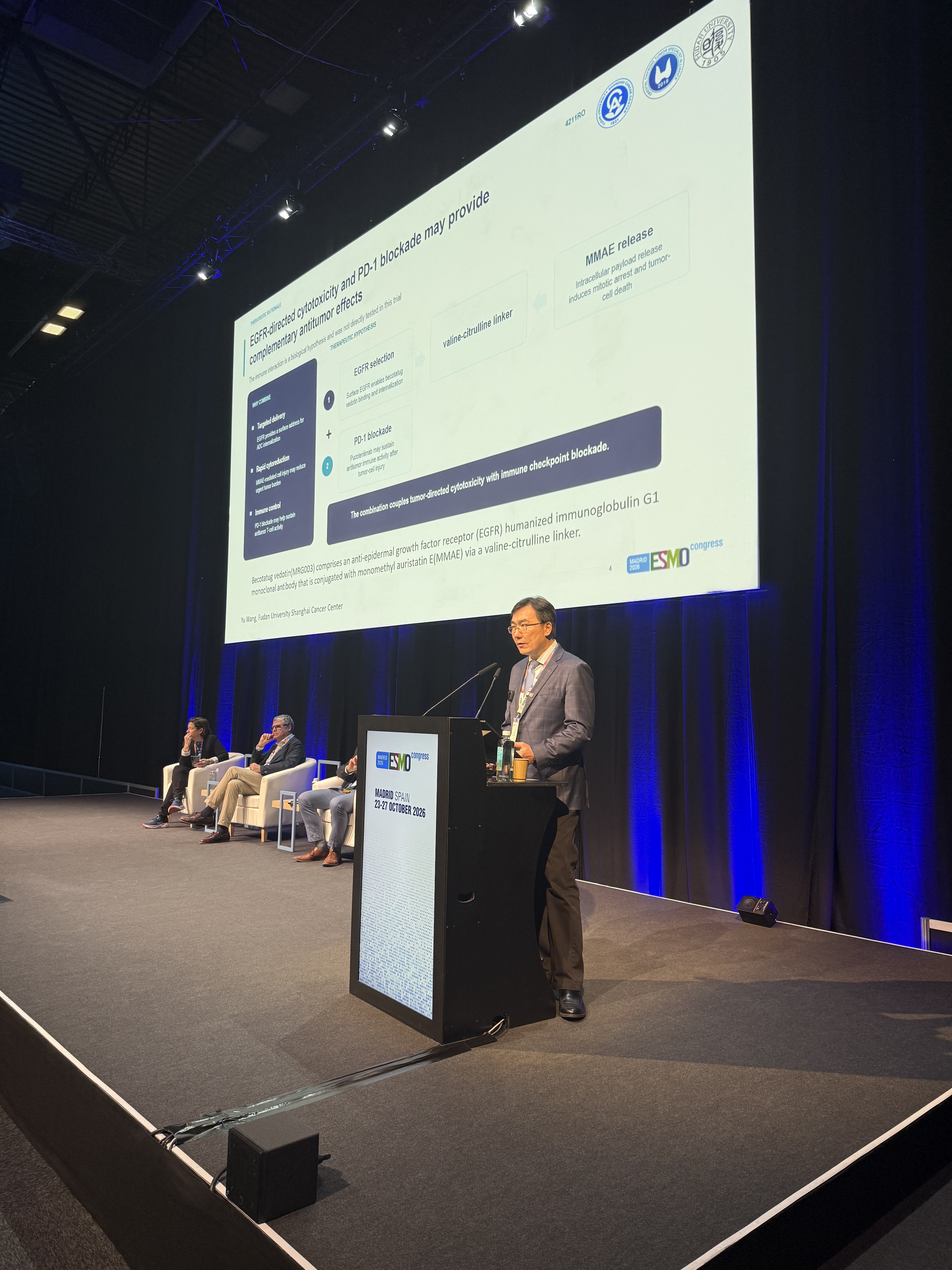
A phase‑II clinical trial led by Professor Wang Yu, Director of the Department of Head and Neck Surgery at Fudan University Shanghai Cancer Center, has released encouraging interim results at the recent European Society for Medical Oncology (ESMO) Congress. Known as EPIC‑TC, the study evaluates a novel two‑drug combination regimen for patients living with unresectable anaplastic thyroid carcinoma (ATC) or poorly differentiated thyroid carcinoma (PDTC), two of the most aggressive subtypes of thyroid cancer.
While most thyroid cancers grow slowly and respond well to standard therapies, ATC and PDTC are notable exceptions. Anaplastic thyroid carcinoma ranks among the fastest‑progressing malignant thyroid tumors. Historically, patients have a median survival of only around five months and a one‑year overall survival rate of roughly 20%. Poorly differentiated thyroid carcinoma generally carries a better prognosis than ATC but shows high disease heterogeneity. Its historical five‑year overall survival rate for all patients ranges from 60% to 70%, though outcomes decline sharply once the cancer becomes locally advanced, unresectable or metastatic. Effective treatment options have long been scarce for these patient groups.
A subset of patients with specific gene mutations can receive matched targeted therapies. However, around half of ATC patients and 65–75% of PDTC patients lack actionable gene targets for approved targeted medicines. Once tumors extensively invade vital tissues and curative surgery is no longer possible, systemic therapies capable of shrinking lesions remain very limited. To address this unmet clinical need, Wang Yu’s team has dedicated years to tackling these hard‑to‑treat thyroid malignancies. Drawing on the hospital’s multidisciplinary team (MDT), clinicians deliver personalised, dynamically adjusted treatment plans for every patient. Individuals first receive pathological and molecular testing. Following systemic drug therapy, the team reassesses whether curative surgery or radiotherapy can be offered according to tumor response.
The team’s earlier retrospective analysis of 95 patients with advanced ATC and PDTC treated over five years found that some patients became eligible for surgery after drug therapy. Even so, retrospective studies carry inherent limitations, and prospective clinical trials such as EPIC‑TC are required for further validation.
EPIC‑TC enrols patients with unresectable ATC or PDTC whose tumors express a predefined threshold of a specific surface protein. The trial investigates a two‑drug combination to assess clinical benefits and adverse events. One agent is an antibody‑drug conjugate (ADC): it binds to the target protein on tumor cells and releases cytotoxic payloads inside cancer cells. The other is an immunotherapy agent that activates the body’s immune system to attack tumors. The combination is administered once every three weeks.
“Notably, enrolment does not require patients to carry corresponding gene mutations — only sufficient expression of the target protein on tumor cells,” Wang explained. Researchers are monitoring tumor shrinkage, disease control, survival outcomes and treatment safety.
Between 2025 and September 17, 2026, a total of 36 patients received the combination therapy, and treatment response could be evaluated in 31 participants, most of whom had ATC. Preliminary results show nearly half of assessable patients achieved marked tumor shrinkage, and more than 60% attained disease control. Treatment response was observed after an average of just 43 days.
The positive efficacy signal was seen mainly in the ATC cohort. Among the 26 evaluable ATC cases, nearly 58% had significant tumor shrinkage. Two patients underwent surgery after substantial tumor regression, and no viable cancer cells were detected in their postoperative specimens. Based on current estimates, the one‑year overall survival rate for this subgroup exceeds 50%.
“Compared with conventional targeted therapy, with or without immunotherapy, this regimen delivers substantially improved efficacy,” Wang noted. Only five PDTC patients were evaluable in this interim analysis, and no marked tumor shrinkage was observed in this small subset.
The researchers also warn of safety risks. These aggressive tumors can erode the trachea, oesophagus and major blood vessels. Rapid tumor shrinkage triggered by medication may lead to life‑threatening complications such as tissue necrosis, tracheoesophageal fistula, massive haemorrhage and severe infection.
“This investigational regimen cannot be considered low‑risk. If it advances to first‑line clinical use after Phase III validation, it must be delivered at hospitals equipped with airway monitoring and multidisciplinary emergency response capabilities,” Wang stressed.
EPIC‑TC participants remain under follow‑up. The team will continue tracking the durability of treatment response, long‑term survival and surgical risks after neoadjuvant therapy, while expanding PDTC enrolment.
“Future multi‑center studies are needed to verify the regimen’s real‑world efficacy and safety limits, and define its role relative to surgery, radiotherapy and other targeted therapies,” Wang said.
During his conference presentation, Wang reiterated that this is an early, single‑center exploratory study. Its promising preliminary findings cannot yet replace established standard treatments. The team hopes upcoming trials will confirm durable efficacy and manageable side effects, ultimately bringing a validated “Chinese solution” for aggressive thyroid cancer.