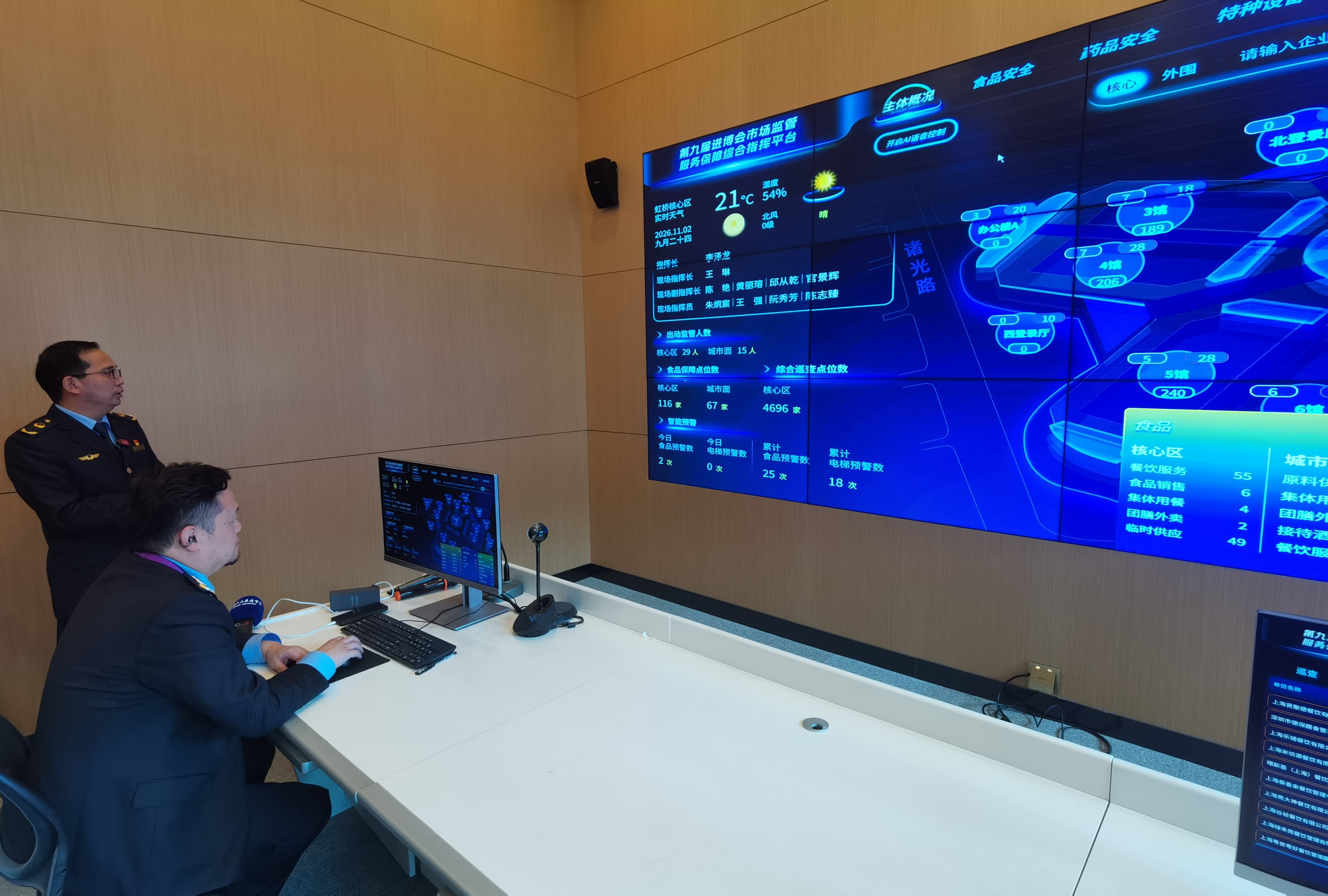
Shanghai's market regulation authority has upgraded its integrated command platform with artificial intelligence for the upcoming 9th China International Import Expo, creating instant inspection tools for food safety, elevator equipment and advertising compliance across the exhibition venue.
AI runs through the entire oversight workflow, building multi-layered safeguards covering catering hygiene, special equipment operation and exhibition order. Regulators now apply digital tools to spot risks and push for closed-loop rectification from kitchen operations and elevator cabins to exhibition booths.
One-click food safety verification tightens catering oversight
The upgraded AI agent known as "food safety intelligent eye" powers the platform's new one-photo inspection function, built on a specialized food safety large language model.
The tool automatically analyzes kitchen footage, generates risk checklists, delivers rectification advice and creates permanent digital records, turning visual inspections into quantifiable data.
Market supervision teams at district and municipal levels monitor four group catering providers across three administrative zones. The system tracks eight critical links including raw material procurement, food processing and meal preparation, forming a closed loop between risk detection and follow-up corrections.
Inspectors only need to snap a photo of on-site kitchen operations. The system immediately flags hazards, produces assessment scores and guides improvements. Inspectors and catering businesses follow identical judgment standards, with every inspection fully traceable.
In one recent case, a kitchen manager received an AI alert via the mini-program. The system flagged cross-contamination risks caused by improperly placed cleaning tools. The staff moved the equipment right away to eliminate hidden dangers.
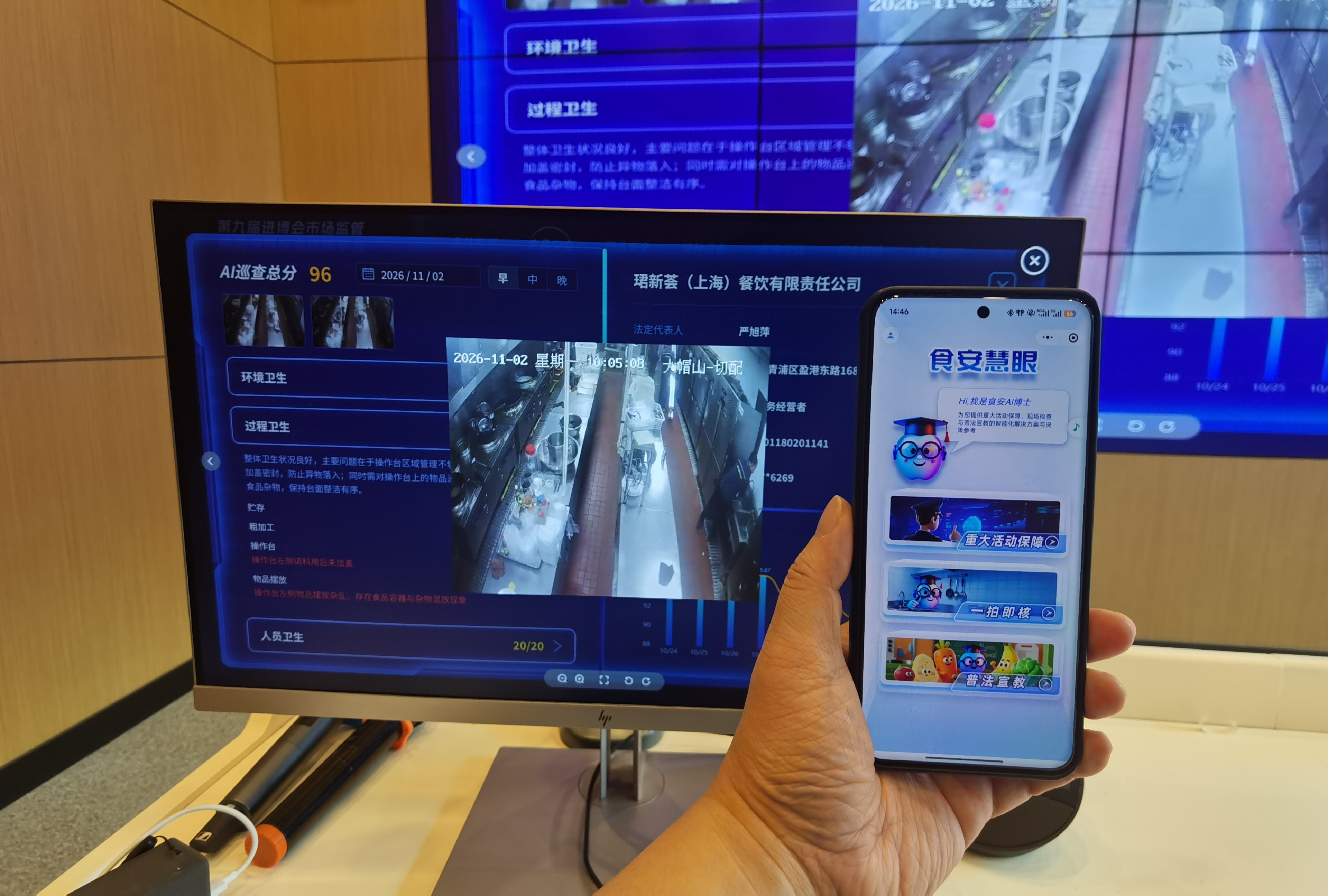
The upgrade also expands the "transparent kitchen" monitoring network. A total of 145 video streams from 55 on-site catering outlets and four group catering firms have been connected to the command platform. The AI automatically captures footage during breakfast, lunch and dinner preparation, scoring hygiene conditions into low, medium and high risk levels based on environmental, operational and personnel standards.
Venue teams launch on-site inspections for outlets scoring below 80 points. Medium-risk businesses scoring between 80 and 95 points receive daily follow-up checks, while low-risk vendors above 95 points are managed primarily through remote supervision.
Compared with past manual inspections and paper records, the unified task coding enables cross-location online collaboration. A single photograph delivers risk assessments and improvement plans to both inspectors and operators. After businesses revise problems and upload new photos for recheck, supervisors sign off on completed cases, leaving a full digital trail and drastically cutting inspection time.
Quick QR code checks solidify special equipment safety
The expo venue operates 520 pieces of special equipment, including 424 elevators with heavy visitor traffic. Inspectors previously conducted at least two full venue patrols every day.
This year's digital upgrade streamlines elevator safety work into a four-step workflow, including QR code scanning, image capture, AI risk analysis and corrective action. Artificial intelligence scans real-time footage to identify equipment malfunctions and component failures, enabling early warning and rapid intervention.
Patrol staff scan the smart elevator QR code on each lift to pull up registration files, maintenance logs, fault histories and past inspection records, while generating new work orders. Law enforcement cameras automatically link footage to inspection tickets, and AI analysis results pop up instantly for manual confirmation and record-keeping.
The platform enables full remote monitoring of all 424 elevators across all brands and models. The system tracks personnel, machinery, environment and management data in real time and shares data directly with maintenance contractors. It supports targeted all-weather upkeep.
Combined with passenger flow tracking on escalators and video cross-checks, AI-powered precision maintenance shifts oversight from manpower-based patrols to technology-driven risk control and improves elevator reliability.
One-tap AI identification sharpens advertising inspections
Advertising compliance checks have long been a core part of expo market supervision. In previous years, teams spent days touring booths to review posters, billboards and electronic display content.
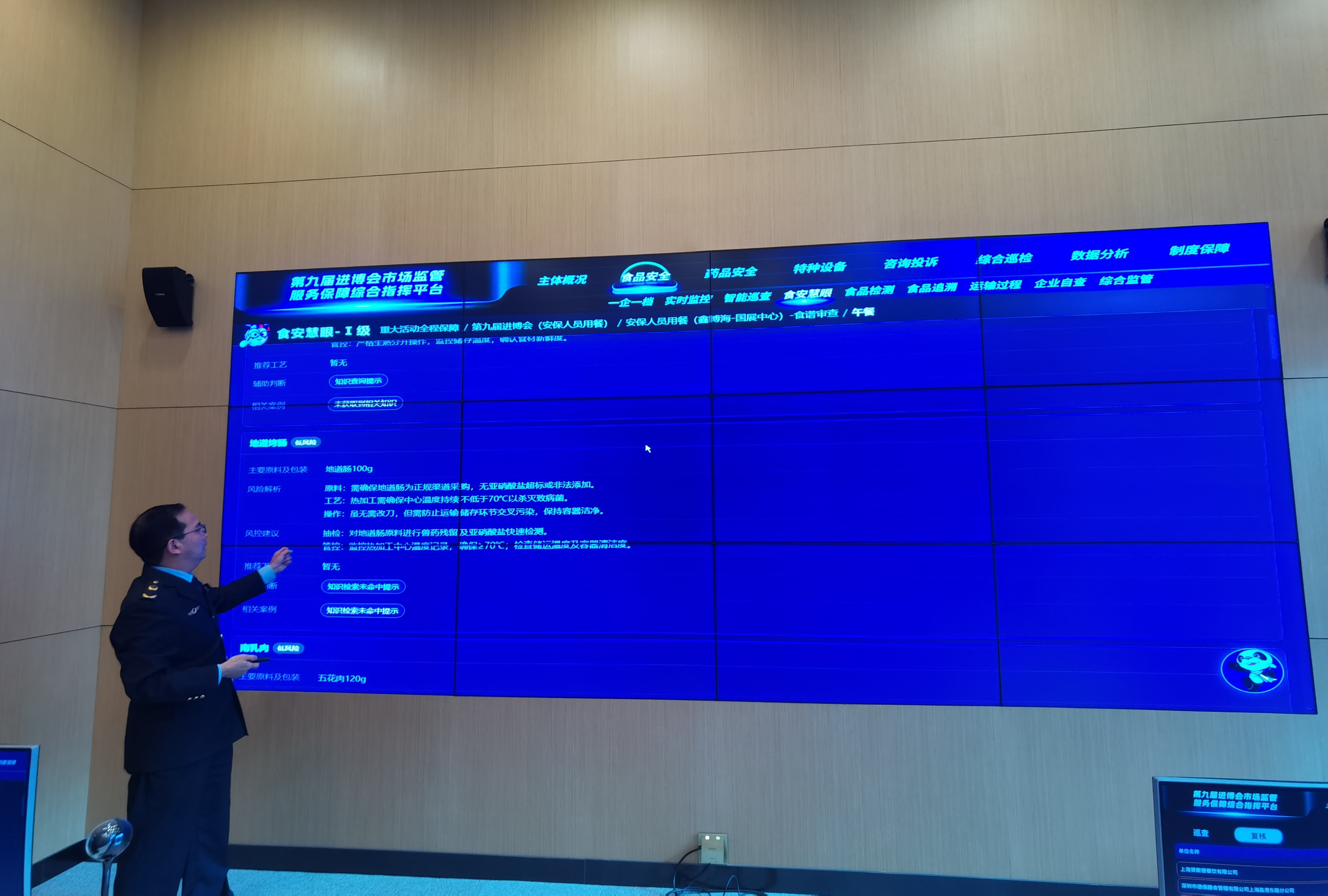
Shanghai's market regulation officials launched an AI advertising inspection system ahead of the expo, building an integrated monitoring framework with mobile data collection, backend risk analysis and command-center scheduling.
Inspectors create work orders and upload photos via mobile phones. The AI instantly cross-references content against a compliance database and flags potential violations. Field officers complete two rounds of verification with machine-generated risk reports before making final rulings, moving compliance checks forward to the pre-exhibition stage.
New live-stream monitoring has been added to the system following last year's trend of live sales at exhibition booths. Regulators record information on streaming platforms, MCN agencies, hosts and product categories, laying a data foundation for traceability and providing proactive guidance for live broadcast compliance.
The command dashboard aggregates real-time data including total booths, inspection progress, violation counts and risk distribution across all exhibition halls. Supervisors reallocate manpower to high-risk booths precisely.
Shanghai market regulators plan to expand these digital tools including food safety QR codes and smart elevator tracking to regular urban supervision, lifting overall governance for catering safety, equipment operation and advertising compliance.