Shanghai Proton and Heavy Ion Center (SPHIC) has welcomed its 10,000th discharged patient, who shared that the center’s solid track record built over more than a decade gives him great confidence.
On November 3, the Shanghai Proton and Heavy Ion Center marked a major milestone in advancing particle therapy in China: more than 11.5 years since its official launch, the center has discharged over 10,000 treated cancer patients. Well-established particle therapy centers in Germany and Japan, two of the earliest global pioneers in this field, took 15 years and more than 20 years respectively to reach the same 10,000-patient milestone. As particle radiotherapy equipment and techniques evolve, patient throughput is no longer the sole benchmark of excellence. What truly reassures patients lies in robust clinical expertise, high-precision beam delivery and proven therapeutic outcomes.
Building Strength in Priority Tumor Types, Breaking Barriers for Hard-to-Treat Cancers
Of the 10,000 discharged patients, 5,139 had head-and-neck tumors, 3,192 abdominopelvic malignancies and 1,669 thoracic tumors. The center has developed a signature portfolio of indications covering over 50 cancer types, encompassing most common malignant tumors. Its flagship disease clusters — nasopharyngeal carcinoma, intracranial and skull-base tumors, lung cancer, prostate cancer, breast cancer and pancreatic cancer — account for three-quarters of all treated cases. Heavy ion therapy stands out as its core strength: approximately 75% of patients receive heavy ion monotherapy or heavy-ion-plus-proton combination radiotherapy.
Perfecting particle therapy for common malignancies forms the foundation. The real clinical challenge is tackling refractory tumors with limited conventional treatment options. The center has treated more than 1,300 breast cancer patients with particle radiotherapy. For hard-to-manage subtypes such as triple-negative and HER2-positive breast cancer, which respond poorly to standard radiotherapy, the center has joined forces with Fudan University Shanghai Cancer Center to develop combined proton-heavy ion regimens, helping patients achieve long-term survival while maintaining quality of life.
Professor Yu Xianjun, president of the Shanghai Proton and Heavy Ion Center (and Fudan University Shanghai Cancer Center), noted: “Collaboration across radiation oncology, medical oncology and pathology to solve complex clinical problems embodies the deep integration of our two institutions. Cross-disciplinary innovation fuels our continuous clinical advancement.”
Top-Tier Equipment & Exclusive Nuclear License Enable Pinpoint Particle Irradiation
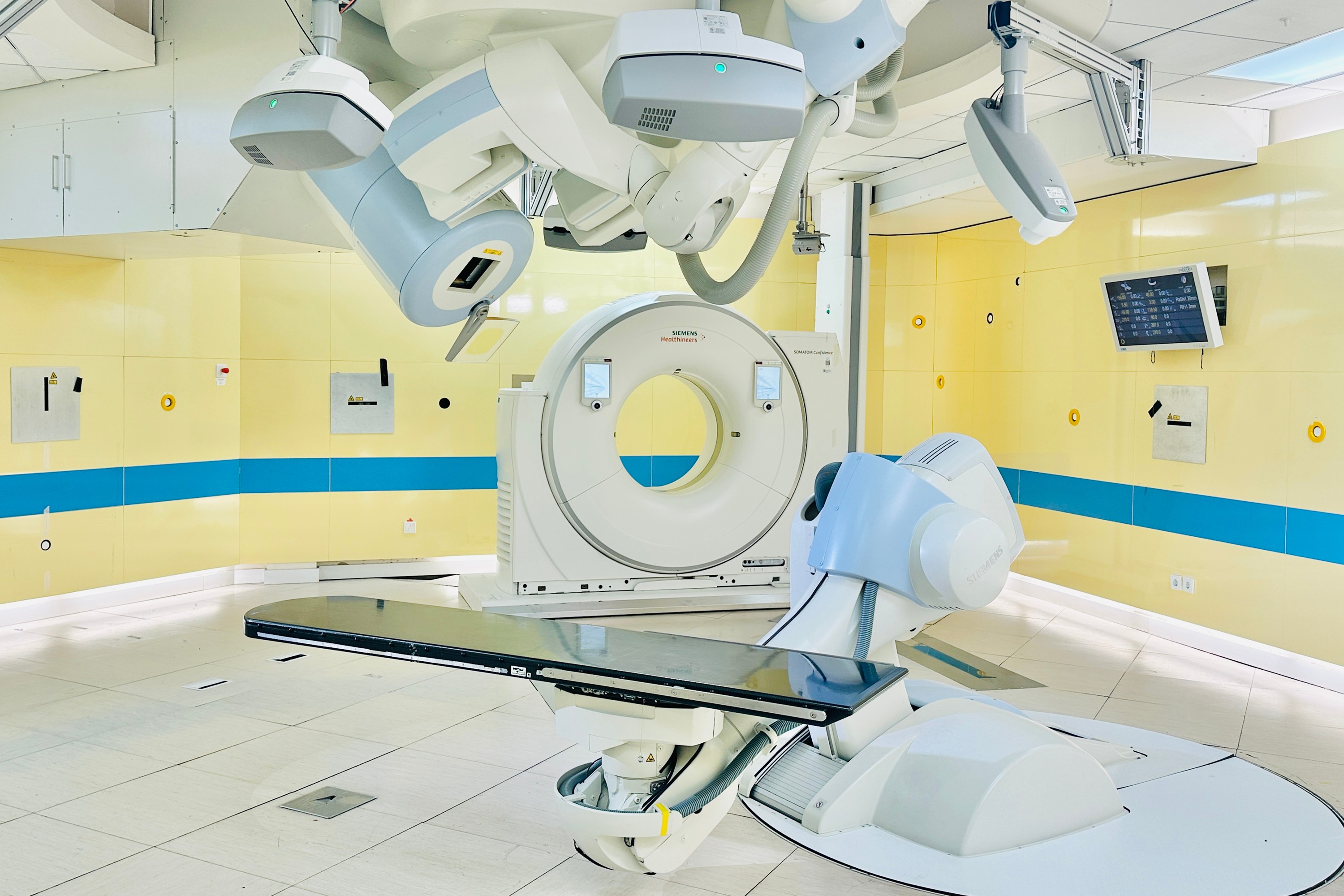
Precision means fewer side effects, fewer detours and greater hope for patients. SPHIC is backed by cutting-edge hardware and a comprehensive system of novel radiotracers, ensuring accurate targeting, precise dose delivery and effective tumor ablation. It is among the world’s first particle therapy centers to deploy mobile in-room CT and the C-RAD surface-guided radiation therapy (SGRT) system. Powered by image-guided radiotherapy (IGRT), adaptive radiotherapy (ART), submillimeter beam precision and a 99.3% pass rate for dose verification, proton and heavy ion beams lock onto tumors in real time, delivering highly conformal treatment.
SPHIC is the only proton and heavy ion center in China independently holding the Class IV License for the Use of Radiopharmaceuticals. It has developed and clinically deployed six novel radiopharmaceutical molecular imaging tracers for priority tumor indications. For instance, [¹⁸F]FAPI‑PET/CT enables clinicians to rule out regional lymph node metastasis in non-small cell lung cancer without invasive biopsy. [¹⁸F]MISO‑PET/CT visualizes hypoxic, radioresistant tumor subregions — one of the trickiest challenges in radiotherapy planning — guiding dose escalation to these resistant zones.
Internationally Competitive Outcomes, Groundbreaking Firsts Rooted in Clinical Expertise
While prioritizing patient safety, the clinical team continues to explore optimal dose schedules and treatment schemes for different tumor types via more than 90 prospective clinical trials, refining the “China protocols” for particle therapy and steadily improving survival outcomes. According to the 2026 Survival Report released by SPHIC, the 5-year overall survival rate across its patient cohort reaches 70.4%. For its priority tumor types, efficacy and toxicity profiles match or exceed international benchmarks from leading cancer centers. Multiple world-first clinical innovations have transformed previously intractable disease scenarios.
- The center pioneered heavy ion monotherapy for locally recurrent nasopharyngeal carcinoma, lifting the 5-year overall survival rate to 45.3% while cutting the incidence of nasopharyngeal mucosal necrosis to 16%. This regimen is now recognized globally as the gold standard for recurrent nasopharyngeal carcinoma.
- It pioneered combined proton and heavy ion radiotherapy for glioblastoma, achieving a 3-year overall survival rate of 38.8% with mild treatment-related adverse events, ideal for patients requiring maximal brain function preservation.
- It is the world’s first center to apply pencil beam scanning (PBS) heavy ion therapy for early-stage lung cancer. Patients with early non-small cell lung cancer achieve a 5-year overall survival rate of 73.8%, with moderate or higher adverse events occurring in only 0.54% of cases. The non-invasive, painless modality is well-suited for elderly patients and those who cannot tolerate or decline surgery.
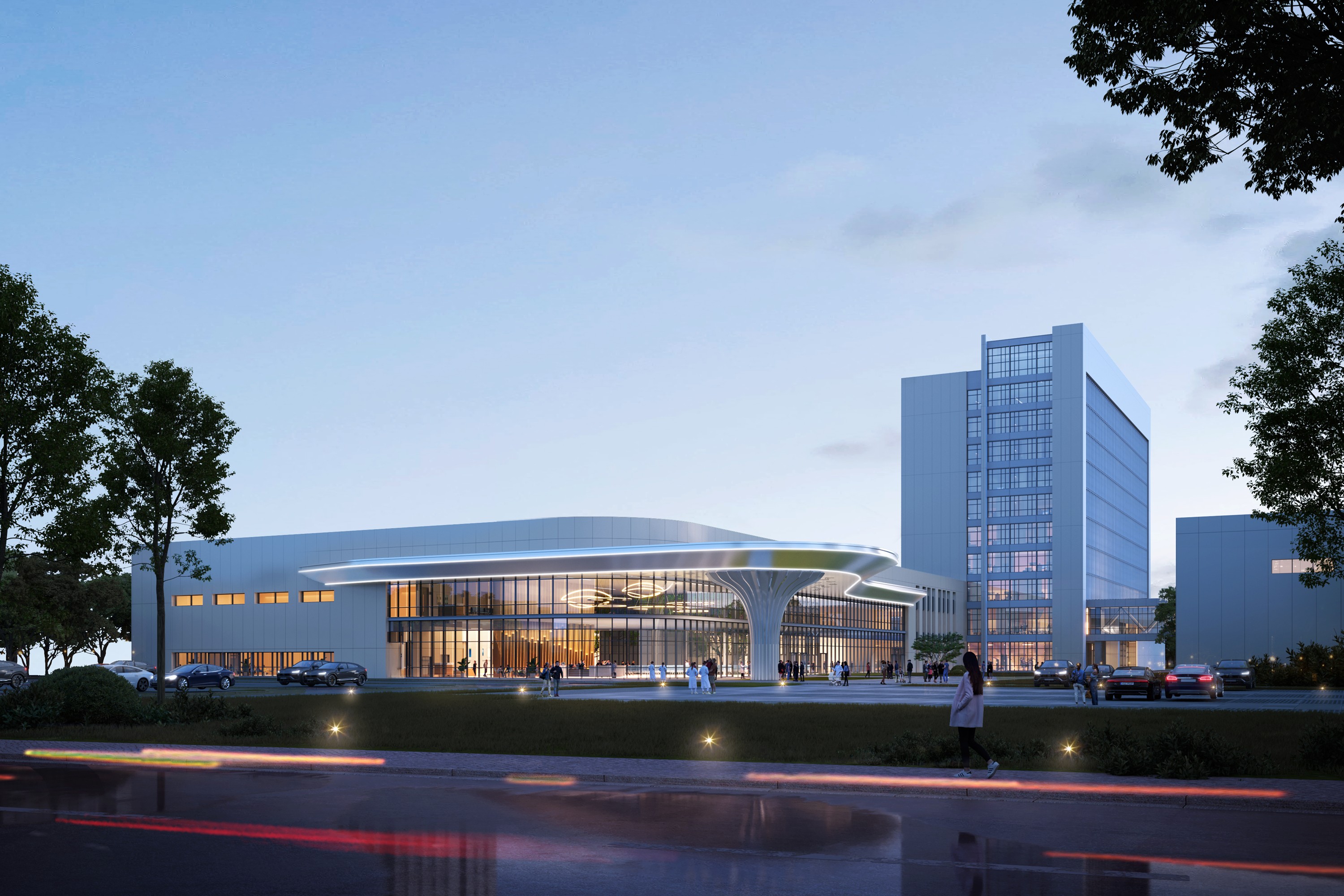
Construction of SPHIC’s Phase II expansion project is well underway. Between 2029 and 2030, one state-of-the-art heavy ion system and one high-performance proton system will be commissioned for clinical use, expanding access to high-quality particle therapy and reinforcing Shanghai’s domestic first-mover advantage and international standing in this field.